


Understanding betting odds is the single most important skill any sports bettor can develop, yet it remains one of the most overlooked aspects of the betting experience. Many Swedish players place wagers based on gut instinct or team loyalty without fully appreciating how odds work, what they represent, and how they directly affect long-term profitability. The difference between a recreational bettor who consistently loses and a sharp bettor who breaks even or turns a profit often comes down to odds literacy and the ability to identify value. For Swedish players exploring international platforms through betting utan svensk licens communities, this knowledge becomes even more valuable because international sites frequently offer superior odds compared to their Swedish-licensed counterparts. This guide breaks down everything you need to know about betting odds, operator margins, and how to systematically find better value at international betting sites.
How Betting Odds Work: The Fundamentals
At their core, betting odds serve two functions. They indicate the implied probability of an outcome occurring, and they determine how much you win if your bet is successful. Every set of odds can be converted into a probability percentage, and understanding this conversion is essential for evaluating whether a bet offers genuine value or whether the operator’s pricing works against you.
Decimal odds are the standard format used across European betting markets, including Sweden. A decimal odd of 2.00 means that for every 1 SEK you wager, you receive 2 SEK back if you win, which includes your original stake plus 1 SEK in profit. An odd of 3.50 returns 3.50 SEK for every 1 SEK staked, delivering 2.50 SEK in profit. The implied probability of any decimal odd is calculated by dividing 1 by the odds. So 2.00 implies a 50% chance, 3.50 implies approximately 28.6%, and 1.50 implies approximately 66.7%.
Fractional odds, used primarily in the United Kingdom, express profit relative to stake. Odds of 5/1 mean you win 5 units for every 1 unit staked. Odds of 3/2 mean you win 3 units for every 2 units staked. While less common at European-facing international sites, you may encounter fractional odds at UK-licensed operators or when reading British betting content.
American odds, also called moneyline odds, are the standard in the United States. Positive numbers like +200 indicate how much profit you win on a 100-unit stake. Negative numbers like -150 indicate how much you must stake to win 100 units of profit. As more Swedish bettors explore NBA, NFL, and MLB markets at international sites, familiarity with American odds becomes increasingly useful.
The Operator’s Margin: Where Your Money Actually Goes
No betting operator offers true odds that perfectly reflect the actual probability of an event. Instead, every bookmaker builds a margin into its pricing, also known as the overround or vigorish. This margin is how the operator generates revenue regardless of the outcome. Understanding margins is critical because they directly determine how much value you receive as a bettor.
Consider a coin flip with exactly two equally likely outcomes. True odds would be 2.00 on each side, reflecting the genuine 50/50 probability. The implied probabilities would sum to exactly 100%. But a bookmaker might price both outcomes at 1.91, making the implied probabilities sum to approximately 104.7%. That extra 4.7% is the margin, and it represents the mathematical edge the operator holds over the bettor.
In the real world of sports betting, margins vary significantly between operators and between different types of bets. Swedish-licensed sites typically operate with margins between 5% and 10% on major football markets and 8% to 15% on less popular sports and lower-tier leagues. These margins are relatively high by global standards, reflecting the smaller number of licensed operators competing for Swedish customers and the regulatory costs associated with holding a Swedish license.
International betting sites, particularly those serving a competitive global audience, routinely offer tighter margins. Leading international operators maintain margins of 2% to 5% on top-tier football, tennis, and basketball markets. Even on secondary sports and lower leagues, their margins typically stay below 8%. The difference may seem small on a single bet, but it compounds dramatically over hundreds or thousands of wagers throughout a year.
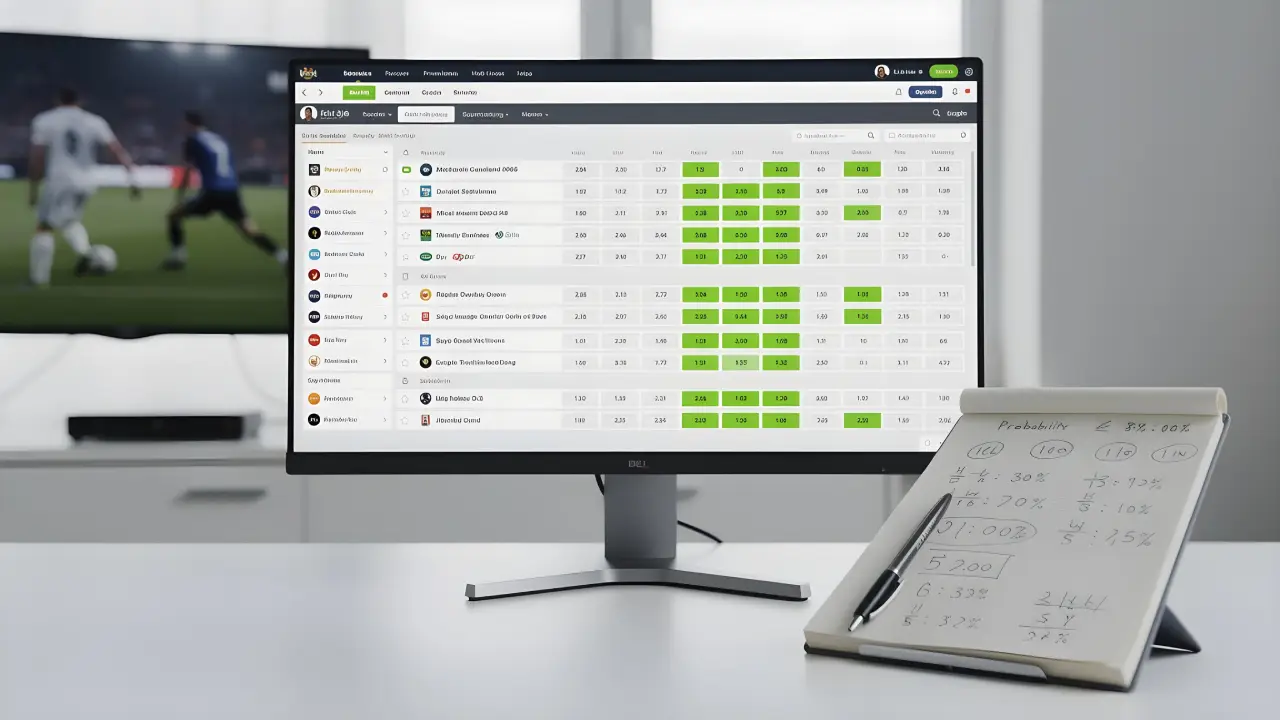
Quantifying the Impact of Better Odds on Your Betting Results
To illustrate why margin differences matter, consider a Swedish bettor who places 100 bets per month at an average stake of 200 SEK. That amounts to 20,000 SEK in total monthly turnover. Assuming a roughly 50% win rate on bets averaging odds of 2.00, the theoretical results differ meaningfully depending on where those bets are placed.
At a Swedish-licensed site with a 7% average margin, the effective odds on a true 2.00 bet would be approximately 1.93. Over 100 bets with 50 winners, the total return would be 96,500 SEK on a 100,000 SEK annual outlay, producing a net loss of 3,500 SEK. At an international site with a 3% average margin, the same true 2.00 bet prices at approximately 1.97. The annual return becomes 98,500 SEK, reducing the net loss to 1,500 SEK. The bettor betting at the international site loses 2,000 SEK less per year, purely from the improved odds.
For a more active bettor placing 200 bets per month at 300 SEK each, the annual savings from better odds escalate to over 7,000 SEK. For professional or semi-professional bettors with higher volumes, the margin difference between Swedish and international sites can represent tens of thousands of kronor in additional value per year. This is not speculative advantage but mathematical certainty built into the pricing structure.
Value Betting: Finding Odds That Favor the Player
Value betting is the practice of identifying situations where the bookmaker’s odds imply a lower probability than the bettor believes to be true. If you estimate that a team has a 55% chance of winning but the bookmaker’s odds imply only a 48% chance, you have found a value bet. Over time, consistently identifying and acting on positive-value opportunities is the only reliable path to profitable sports betting.
International betting sites create more value opportunities for two related reasons. First, their lower margins mean that the odds more closely approximate true probabilities, which reduces the baseline disadvantage the bettor faces. Second, the sheer number of international operators means that pricing varies significantly across sites, creating arbitrage and value situations that are nearly impossible to find when limited to the handful of Swedish-licensed bookmakers.
Odds comparison tools are essential for value bettors. Several independent websites aggregate odds from dozens of international operators, allowing you to instantly see which site offers the best price on any given market. A match where one operator offers 2.10 on the home win while another offers 2.25 represents a 7% difference in potential profit on a single bet. Systematically taking the best available odds across multiple sites compounds this advantage over time.
Asian Handicap Markets: Where International Sites Excel
Asian handicap betting is one of the most popular market types among experienced bettors, and it is an area where international sites hold a substantial advantage over Swedish-licensed operators. Asian handicaps eliminate the draw outcome by applying a goal handicap to one team, creating a two-way market with more balanced odds and tighter margins.
The key innovation of Asian handicaps is the use of quarter-goal increments. Instead of whole-goal handicaps like -1 or +2, Asian lines include options like -0.25, -0.75, +1.25, and +1.75. These fractional handicaps split your stake between two adjacent outcomes, reducing risk and providing more precise coverage of the expected goal difference.
Swedish-licensed sites typically offer basic Asian handicap options on major matches, but the line variety and depth of pricing lag significantly behind international operators. A Premier League match at a Swedish site might have three or four Asian handicap lines available. The same match at a leading international operator could offer 10 to 15 different handicap options, each with tight margins and competitive pricing. For bettors who focus on handicap markets, the international betting landscape provides a fundamentally superior product.
Live Odds Quality: Where Every Second Counts
Live betting odds require constant recalculation as events unfold in real time. A goal, a red card, a weather change, or a momentum shift all demand immediate odds adjustment. The quality of live odds depends on the speed and accuracy of these adjustments, and international sites generally outperform Swedish-licensed operators in this area.
International operators invest heavily in data infrastructure, using direct stadium feeds and proprietary algorithms to update odds within seconds of key events. This rapid adjustment benefits informed bettors who can spot moments where the odds have not yet fully reflected a change in match dynamics. A Swedish-licensed site that takes 15 to 30 seconds longer to update its live prices after a goal effectively locks out bettors during the period when the most profitable live betting opportunities exist.
The margins on live odds also differ between markets. Swedish sites often apply wider margins to in-play markets to compensate for the increased risk of well-informed bettors exploiting price delays. International sites compete aggressively on live margins because they serve a global audience of sharp bettors who would immediately move to a competitor offering better prices. This competitive pressure benefits all live bettors, including Swedish players who choose to wager at international platforms.
Building an Odds-First Betting Strategy
Transitioning from casual betting to a value-conscious approach requires a shift in mindset. Instead of starting with a match and then looking for a bet, the odds-first approach starts with the numbers and works backward to the most valuable opportunities available on any given day.
Begin by opening accounts at two or three international betting sites with consistently competitive odds. Use an odds comparison tool as your starting point rather than any single operator’s sportsbook. Identify matches or markets where one site’s pricing stands out as notably better than the average. Research the underlying sporting event to confirm that the odds represent genuine value based on your analysis, not just a random pricing anomaly. Place your wager at the site offering the best price for that specific market.
Track every bet you place, recording the odds you received, the closing odds at kick-off, and whether you won or lost. Over time, this data reveals whether you are consistently beating the closing line, which is the strongest indicator of betting skill. If you regularly take odds that are higher than where the market settles at the start of the event, you are finding value regardless of your short-term win rate. The long-term mathematical expectation will be in your favor, and the better odds available at international sites give you the best possible foundation for making this approach work sustainably across hundreds and thousands of wagers throughout each betting season.